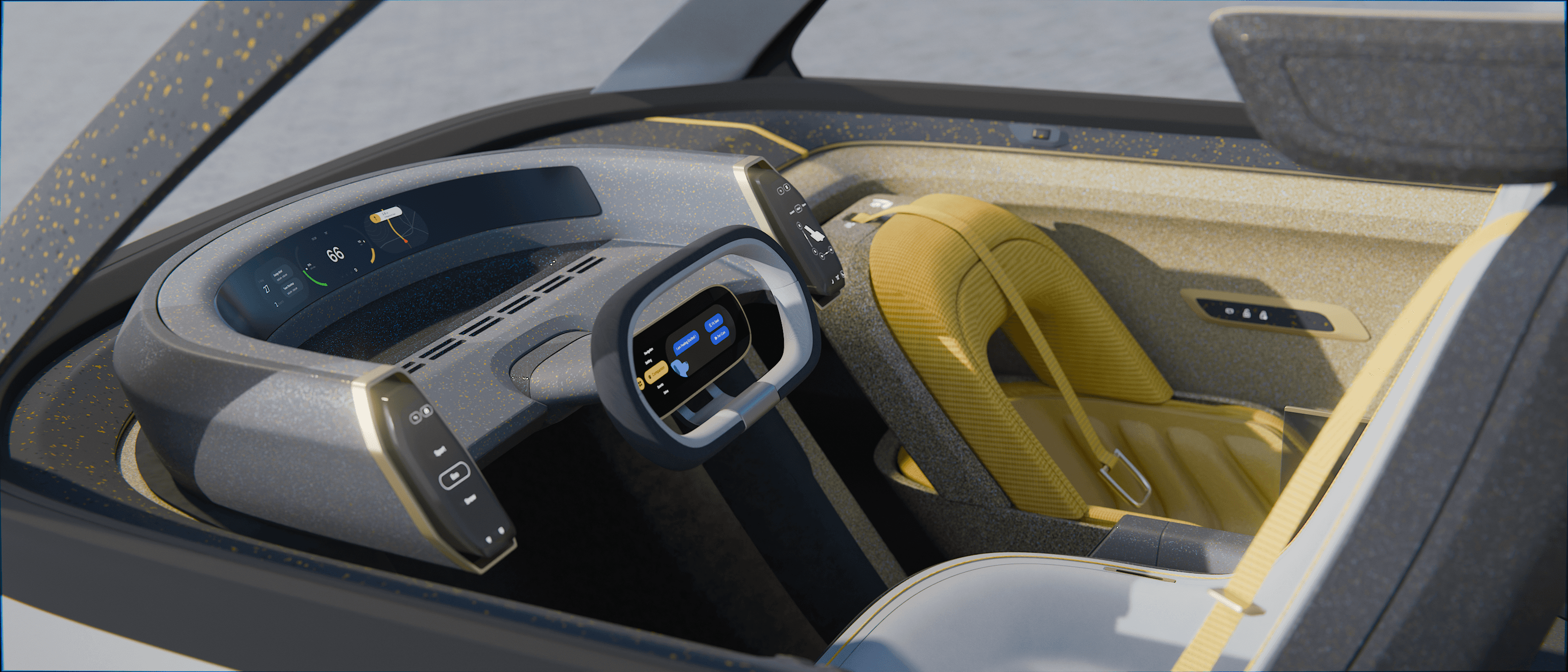
Chevrolet 2035 PAW Concept
Category
Automotive UX
Team
Jerry Cai
Yuki Sato
Sixuan Leng
Una Cai - Producer
My Role
Product R&D
HMI Design System
3D Visualization
Physical Prototyping
Chevrolet PAW is a GM-sponsored concept created by a four-person team in collaboration with GM’s California Advanced Design Studio. Designed for Gen Z in 2035, it explores how adaptive space and digital experiences can support humans and dogs living and traveling together.
Exterior Designer
Yuki Sato
Interior Designer
Sixuan Leng
Creative Producer
Una Cai
Experience / HMI Designer
Jerry Cai

Solution

A 2035 Chevrolet concept integrating adaptive cabin architecture, pet-centered features, and digital UX to support connection, independence, and care throughout the journey.

Core Usecases
PAW recognizes and greets both human and dog, adapting companion settings and surfacing relevant controls based on the dog’s state and the current journey context.


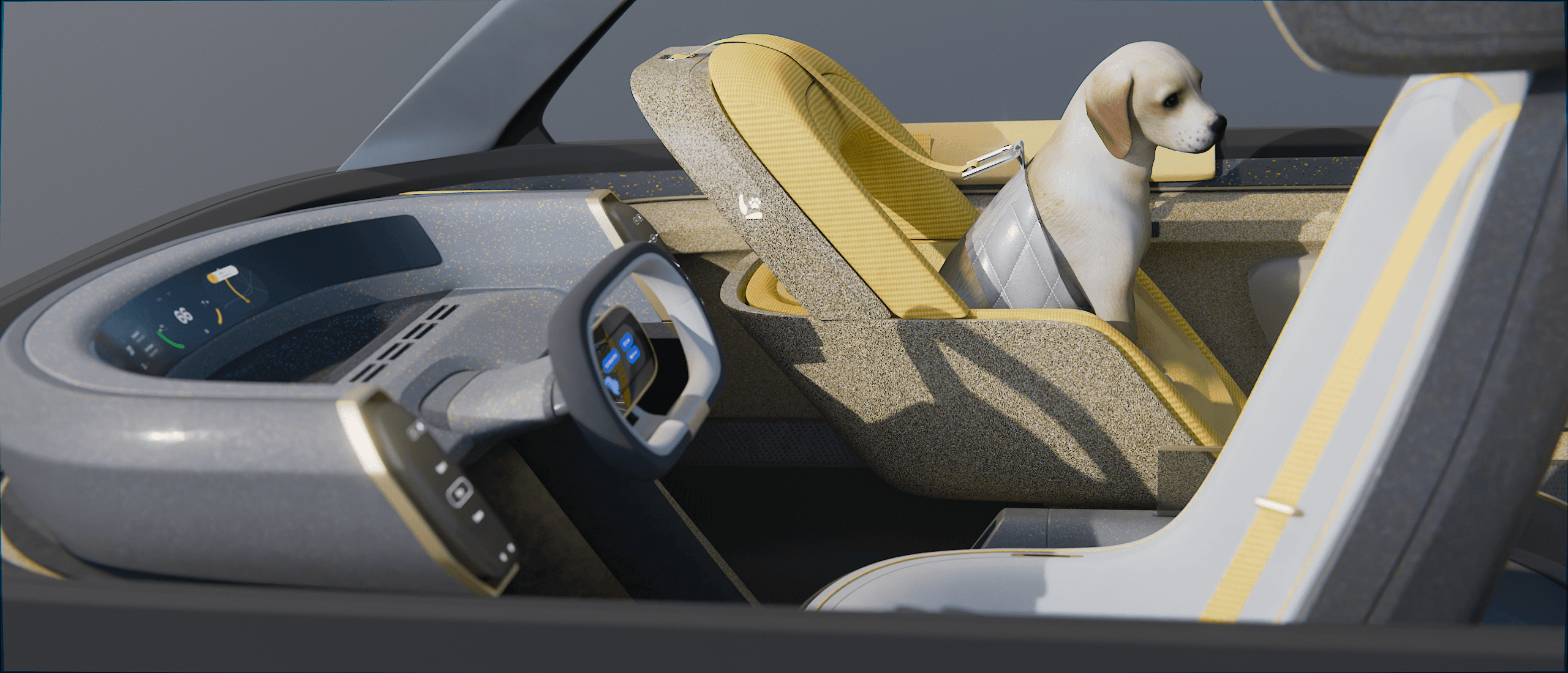
PAW’s designated front dog seat provides a supported and secure alternative to the cargo area. Through the adjacent control panel, the seat can rise closer to the human eye line, strengthening visual connection while allowing the dog to look outside or rest against the padded window ledge.


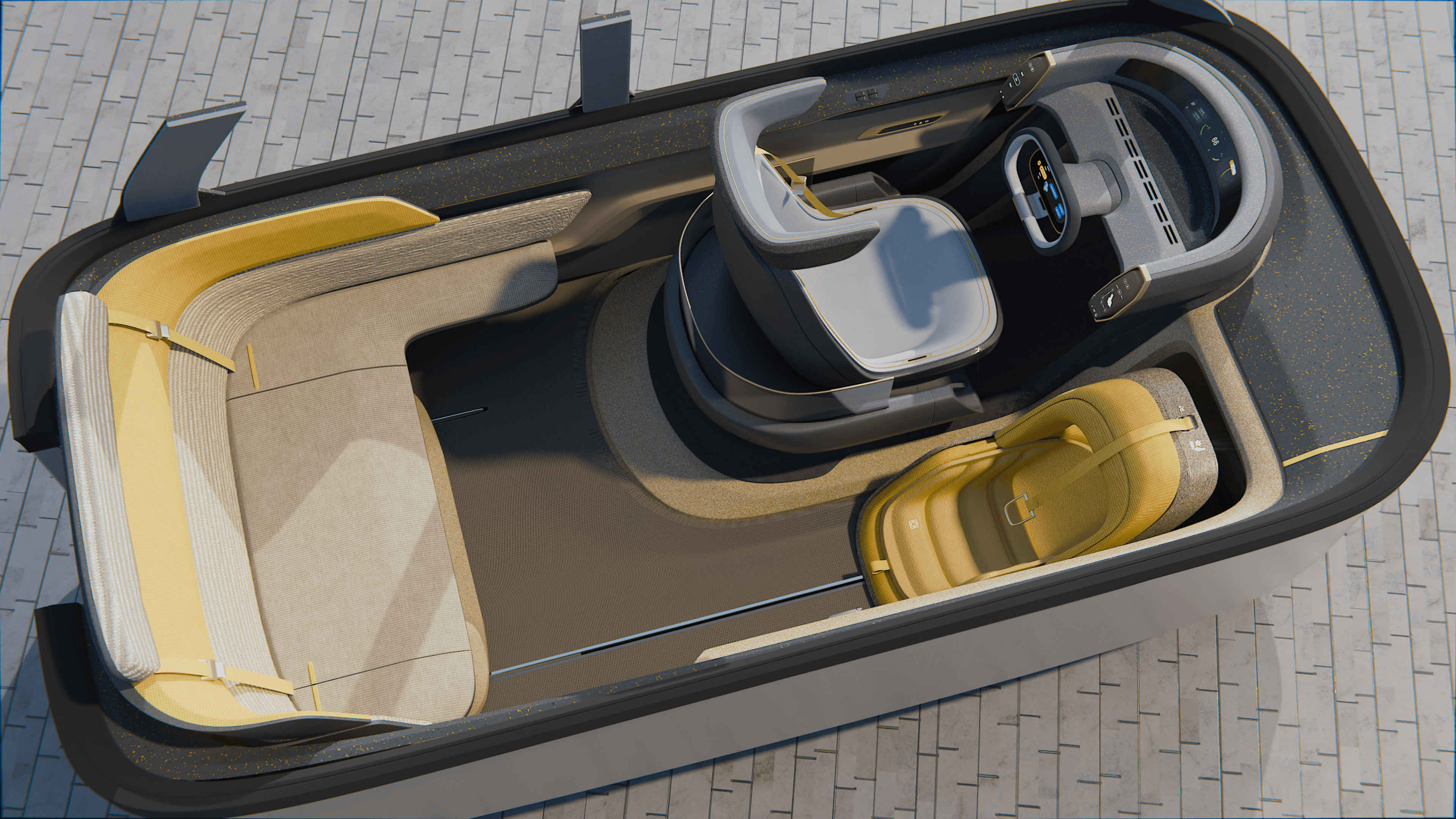
Through the side panel, PAW reconfigures the seating and dog zone for different scenarios—bringing human and dog together in Companion Mode, or creating a secure rear retreat and more personal space in Individual Mode.


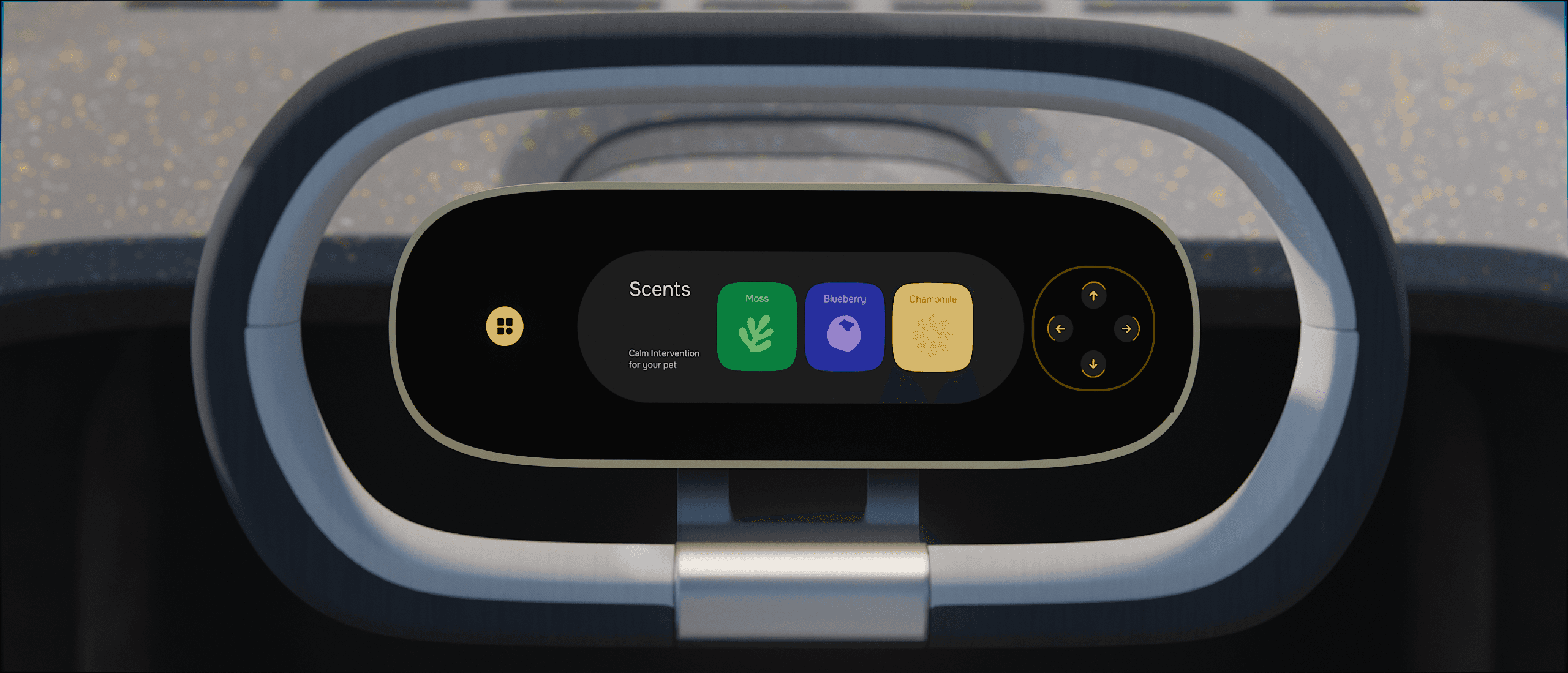
From the front display, owners can tailor the dog zone with natural scent modules designed to create a familiar, calming environment. Integrated food, water, and onboard vacuum features make everyday care and cleanup part of the cabin itself.


Research
For Gen Z a dog is not simply a animal. It is a family member whose needs influence where they live, how they spend their time, and how they move through the world.

97%
97 % of U.S. dog owners consider their pets family members.
7M
California is home to approximately 7 million dogs.
55%
55% Gen Z would prioritize a pet-friendly home.
Rooted in real moments, everyday life, and community, Chevrolet has long designed vehicles around the people who share them. Its dealer communities also actively support animal welfare and pet adoption.

Design Decision
Humans and dogs do not perceive color in the same way. Dogs have dichromatic vision and distinguish blue and yellow more reliably than red and green. This gave us a shared perceptual foundation for developing PAW’s physical and digital palette.


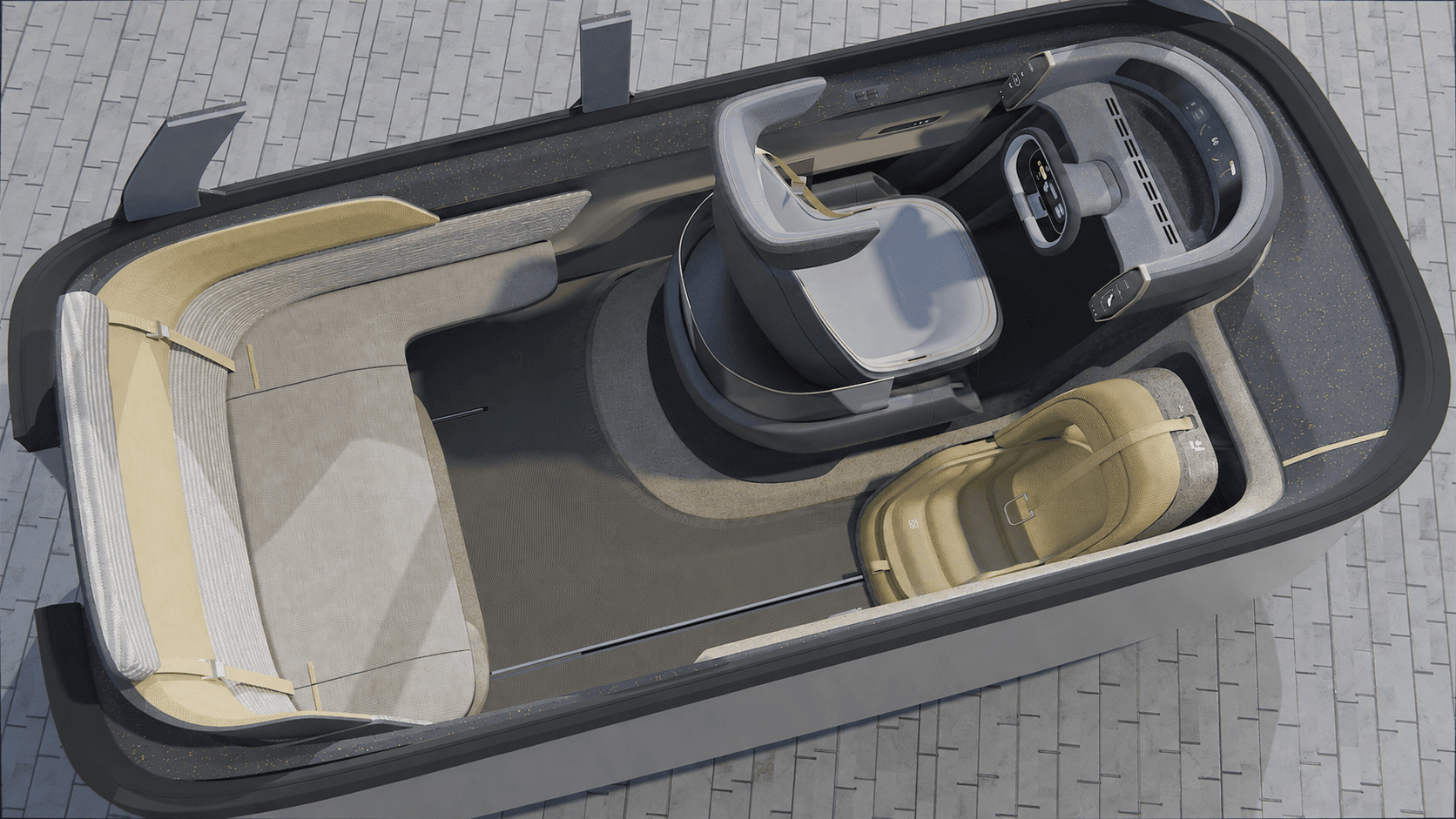
Because blue and yellow remain distinguishishable in canine vision, we carried these colors from the cabin’s CMF into the HMI. Yellow represents the human, while blue identifies the dog—creating a clear and consistent language across physical zones, profiles, and controls.

Final Takeaway
Defining vehicle-level use cases helped our team align HMI, interior, exterior, and CMF around the same intent. This project taught me that automotive UX extends far beyond the screen—every digital interaction, physical surface, and spatial transition shapes the experience together.
