Neura
Category
Automotive AI Agent
Time
Nov - Dec 2025
Team
Individual Project
Tools
Figma, Aftereffect, Unreal Engine
Neura is an AI-driven digital cockpit solution targeted for 2030 deployment. It is built to detect and address physiological stress in real-time, bridging the critical divide between wellbeing and autonomous control.
Neura is an AI-driven digital cockpit solution targeted for 2030 deployment. It is built to detect and address physiological stress in real-time, bridging the critical divide between wellbeing and autonomous control.
Neura is an AI-driven digital cockpit solution targeted for 2030 deployment. It is built to detect and address physiological stress in real-time, bridging the critical divide between wellbeing and autonomous control.
Background
Background
Internal Monitoring
To enable real-time analysis without external dependency, the final Helmet design embeds edge computing capabilities directly alongside precision sensors and immersive speakers. This integrated approach ensures zero-latency feedback within a streamlined form factor.
To enable real-time analysis without external dependency, the final Helmet design embeds edge computing capabilities directly alongside precision sensors and immersive speakers. This integrated approach ensures zero-latency feedback within a streamlined form factor.
Driver Sensing
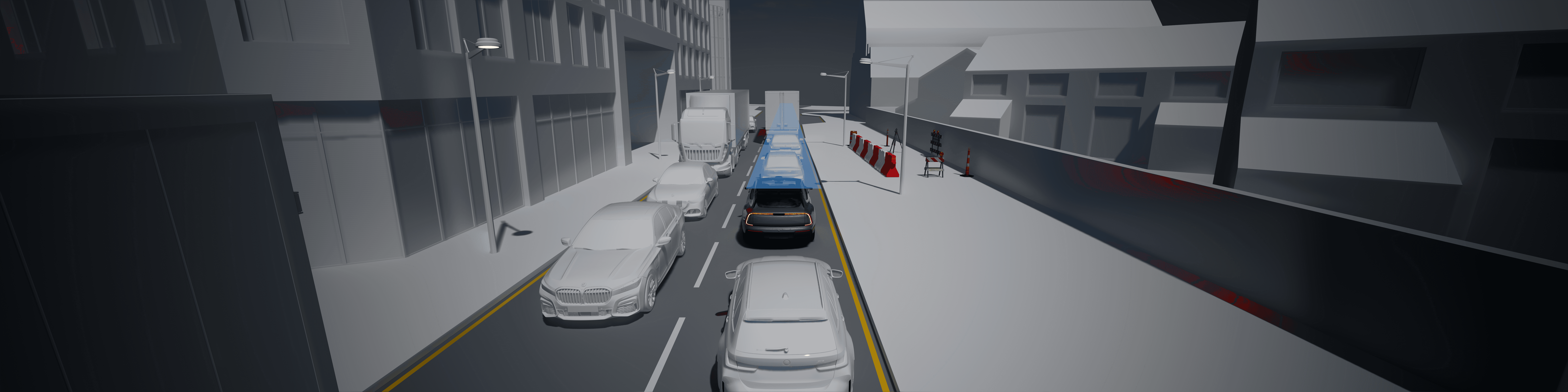
However, the interior cockpit lacks comparable clarity. To ensure comprehensive safety, the system must pair external environmental awareness with internal physiological insight—moving beyond passive observation to active understanding.
However, the interior cockpit lacks comparable clarity. To ensure comprehensive safety, the system must pair external environmental awareness with internal physiological insight—moving beyond passive observation to active understanding.
Current Problems
Current Problems
The Current Capability
Current Driver Monitoring System is highly effective at tracking visual attention. It precisely monitors gaze and head position to ensure the driver is looking at the road.
Current Driver Monitoring System is highly effective at tracking visual attention. It precisely monitors gaze and head position to ensure the driver is looking at the road.
The Missing Dimension
However, visual data alone is incomplete. It lacks physiological context. Without reading heart rate or stress levels, the system captures behavior but misses the driver's internal state.
However, visual data alone is incomplete. It lacks physiological context. Without reading heart rate or stress levels, the system captures behavior but misses the driver's internal state.
Opportunities - From Detecting to Solving
Opportunities - From Detecting to Solving
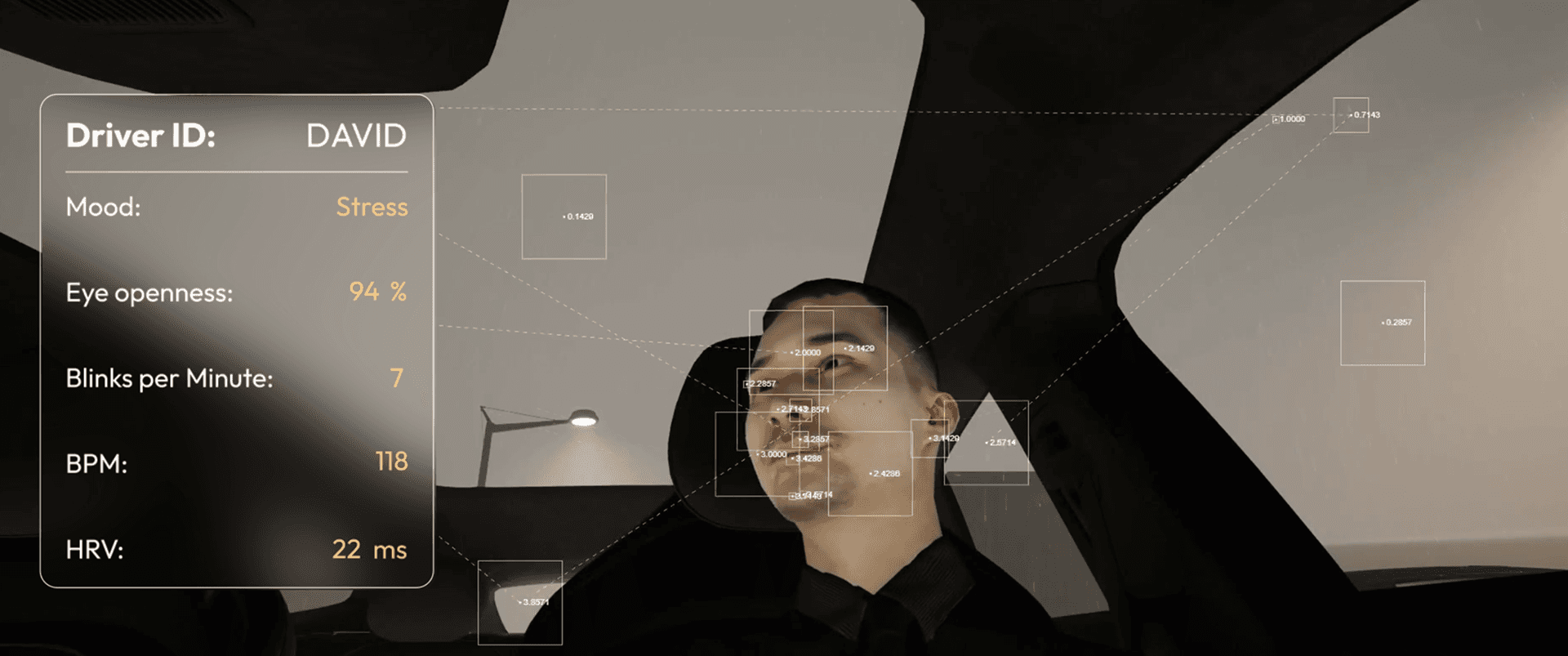
With advanced detection, the system moves beyond passive monitoring to create a 'Detect-to-Resolve' ecosystem. Instead of merely alerting a compromised driver, it proactively adjusts the environment to reduce stress and modifies autonomous driving parameters to ensure wellness
With advanced detection, the system moves beyond passive monitoring to create a 'Detect-to-Resolve' ecosystem. Instead of merely alerting a compromised driver, it proactively adjusts the environment to reduce stress and modifies autonomous driving parameters to ensure wellness
Multi-Modal Sensor Fusion
Multi-Modal Sensor Fusion
Multi-Modal Sensor Fusion
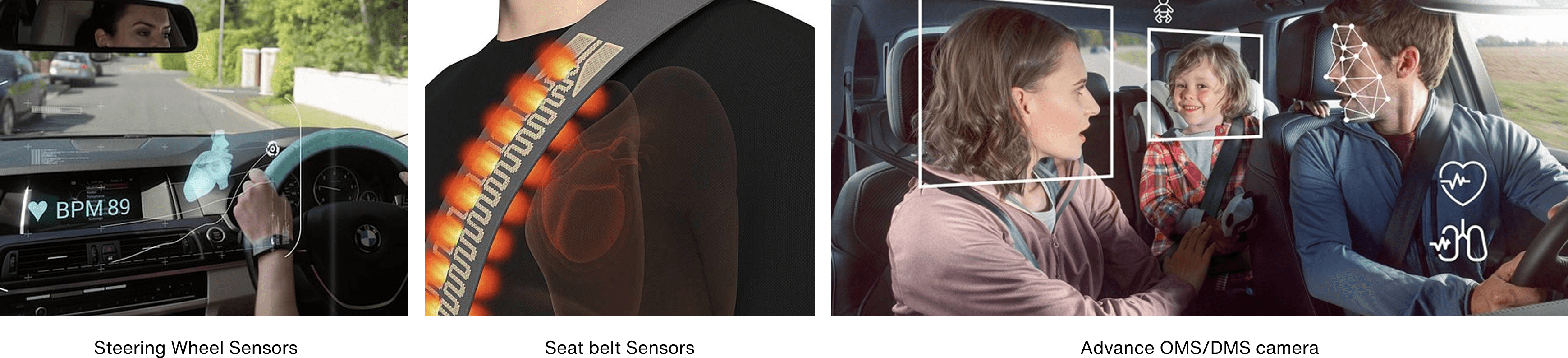
To capture high-fidelity biosignals without compromising comfort, I integrate sensors into natural touchpoints. This 'invisible' sensor array continuously monitors vital signs through the steering wheel and seatbelt, providing deep health insights without requiring the driver to wear any extra devices
To capture high-fidelity biosignals without compromising comfort, I integrate sensors into natural touchpoints. This 'invisible' sensor array continuously monitors vital signs through the steering wheel and seatbelt, providing deep health insights without requiring the driver to wear any extra devices
Design Solution
Contextual Awareness
Contextual Awareness
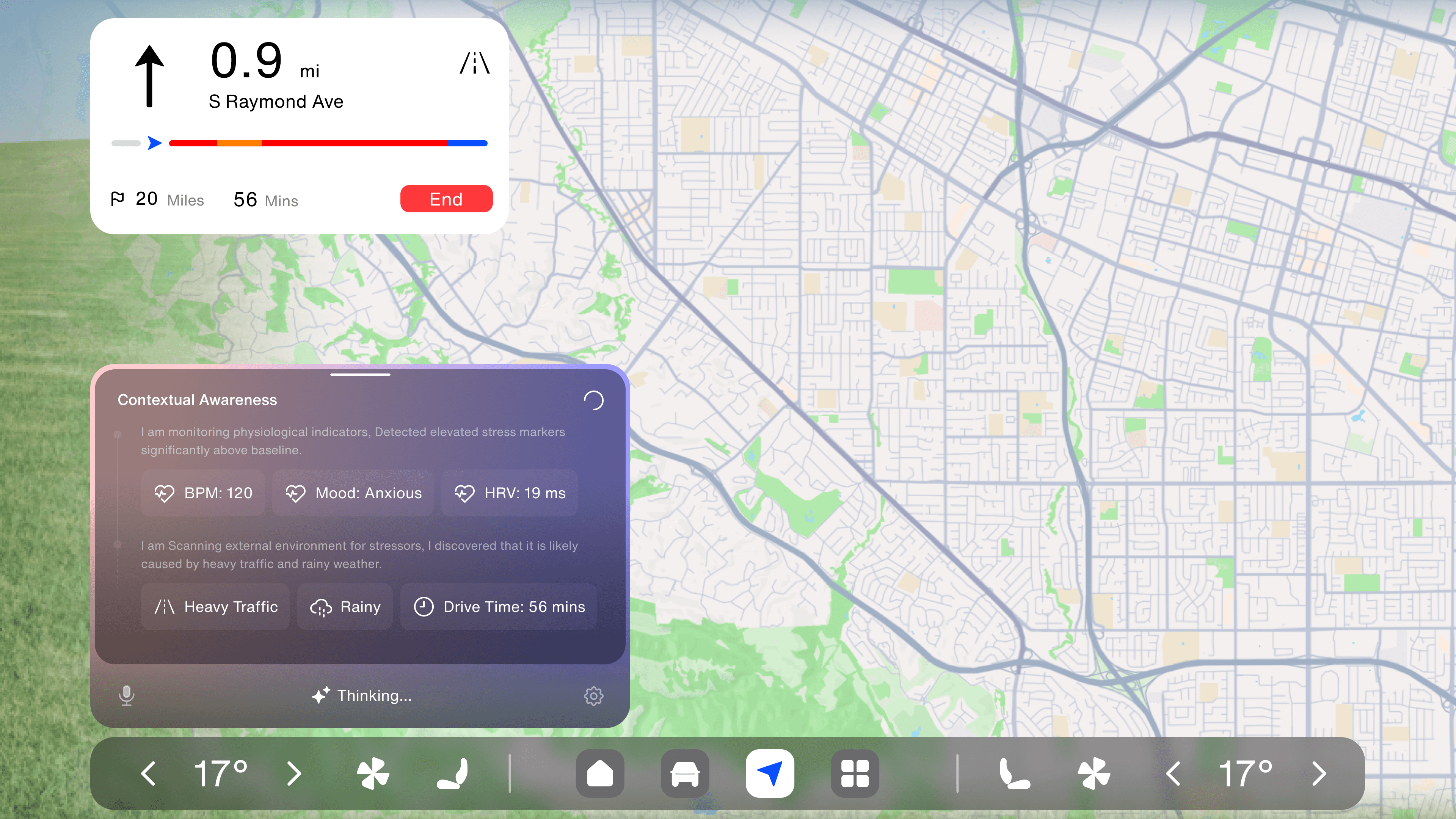
The system synthesizes real-time physiological data with environmental context to identify the root cause of driver stress. By mapping sensory countermeasures to diagnosed anxiety, it autonomously deploys a tailored "Decompression Mode" via haptics and acoustics.
The system synthesizes real-time physiological data with environmental context to identify the root cause of driver stress. By mapping sensory countermeasures to diagnosed anxiety, it autonomously deploys a tailored "Decompression Mode" via haptics and acoustics.
Computing the Solution
Computing the Solution
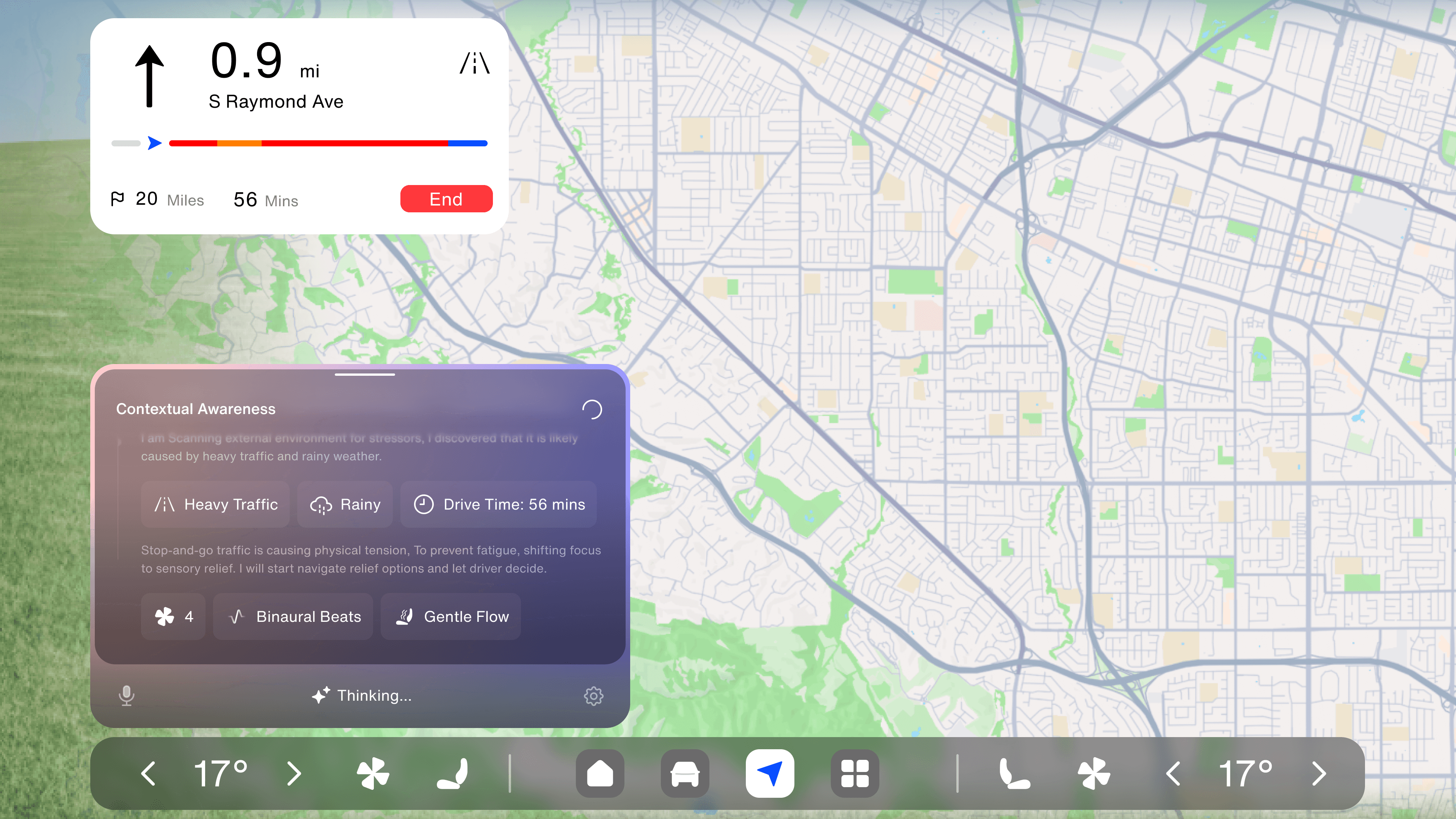
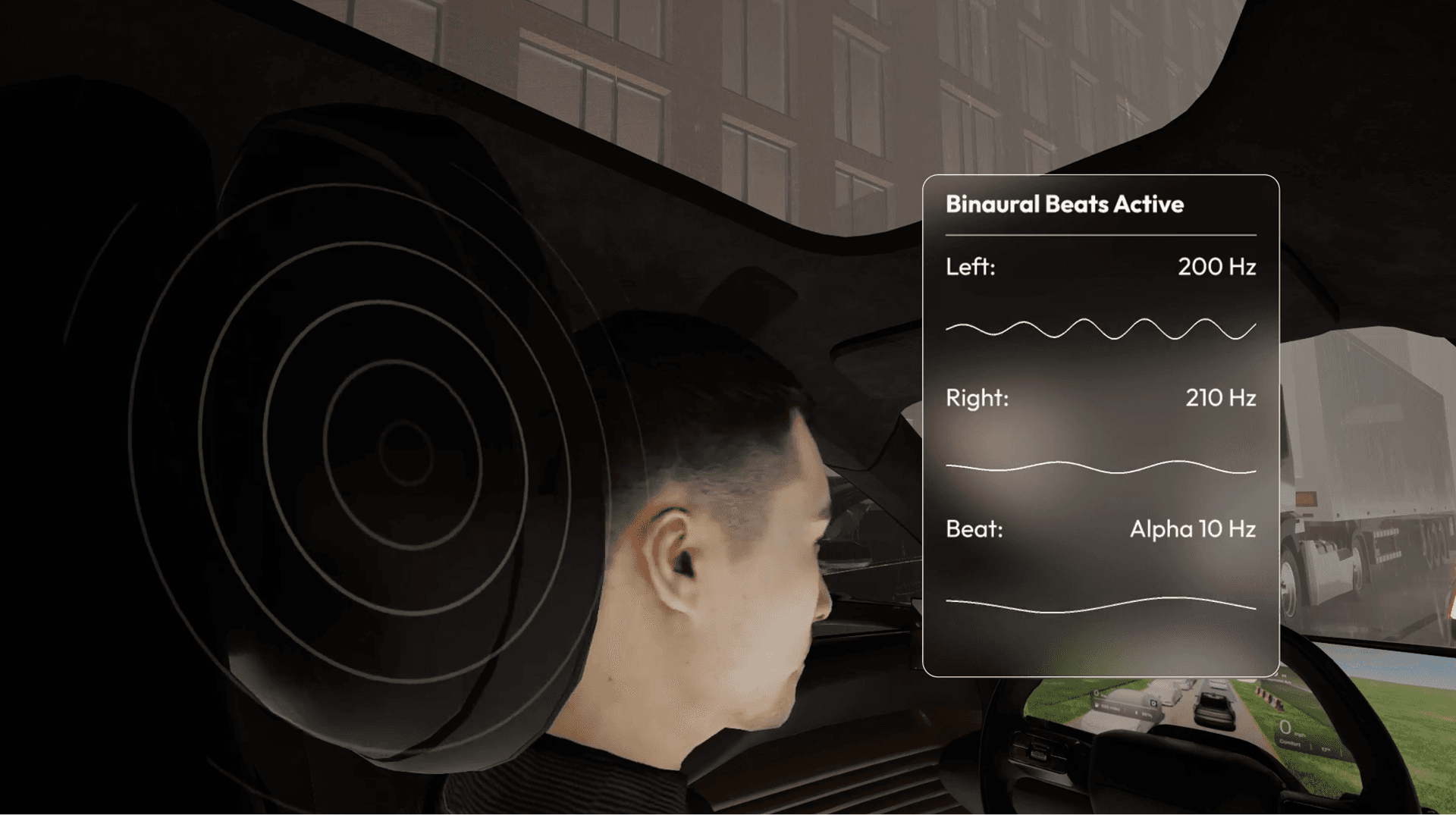
Upon diagnosing 'Traffic-Induced Anxiety,' the system cycles through its sensory library to calculate the most effective countermeasure. It selects Binaural Beats to regulate neural frequency and Gentle Airflow to lower physical temperature—constructing a tailored 'Decompression Mode' specifically for this scenario
Upon diagnosing 'Traffic-Induced Anxiety,' the system cycles through its sensory library to calculate the most effective countermeasure. It selects Binaural Beats to regulate neural frequency and Gentle Airflow to lower physical temperature—constructing a tailored 'Decompression Mode' specifically for this scenario
Tailored Solution
Tailored Solution
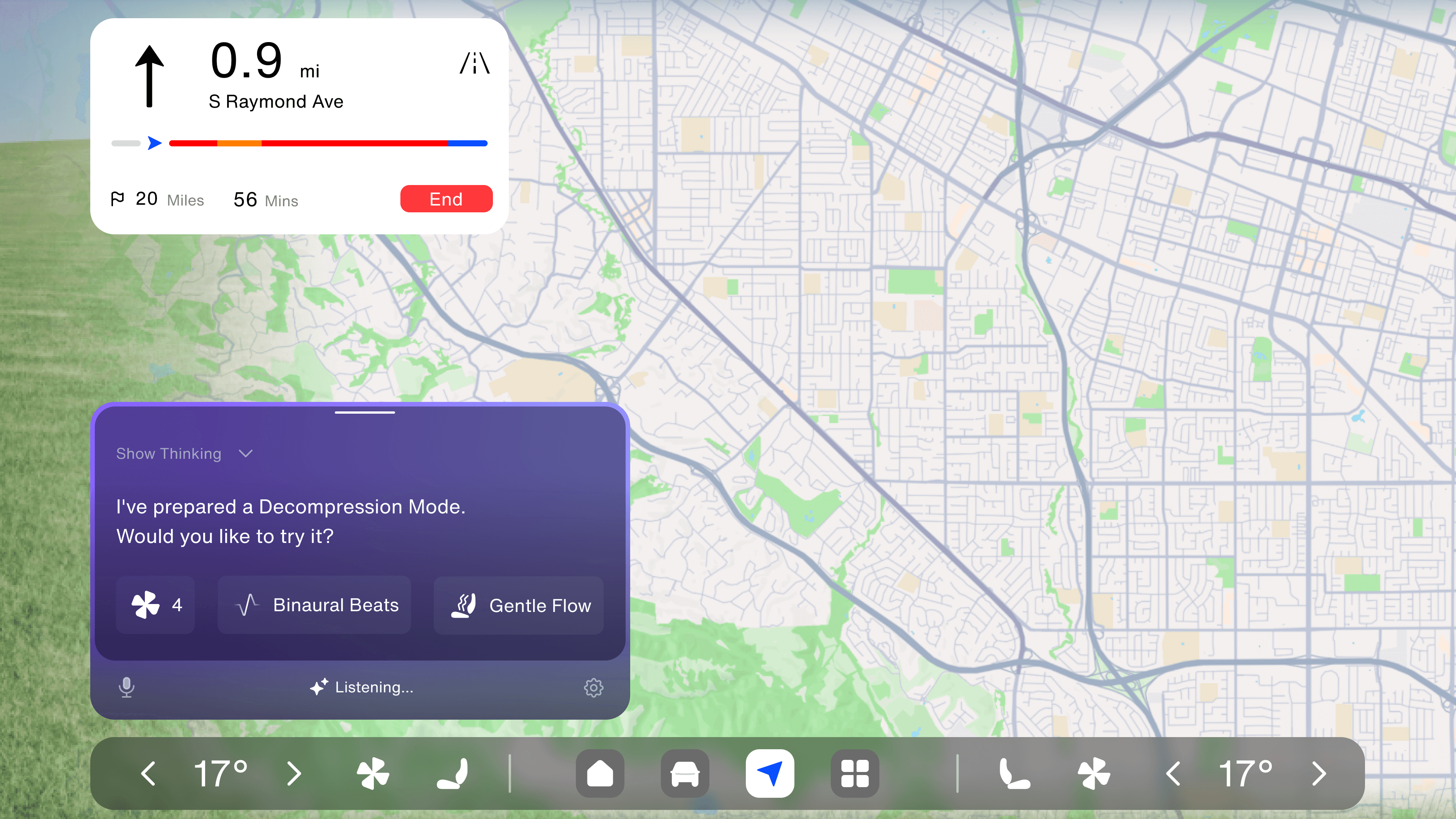
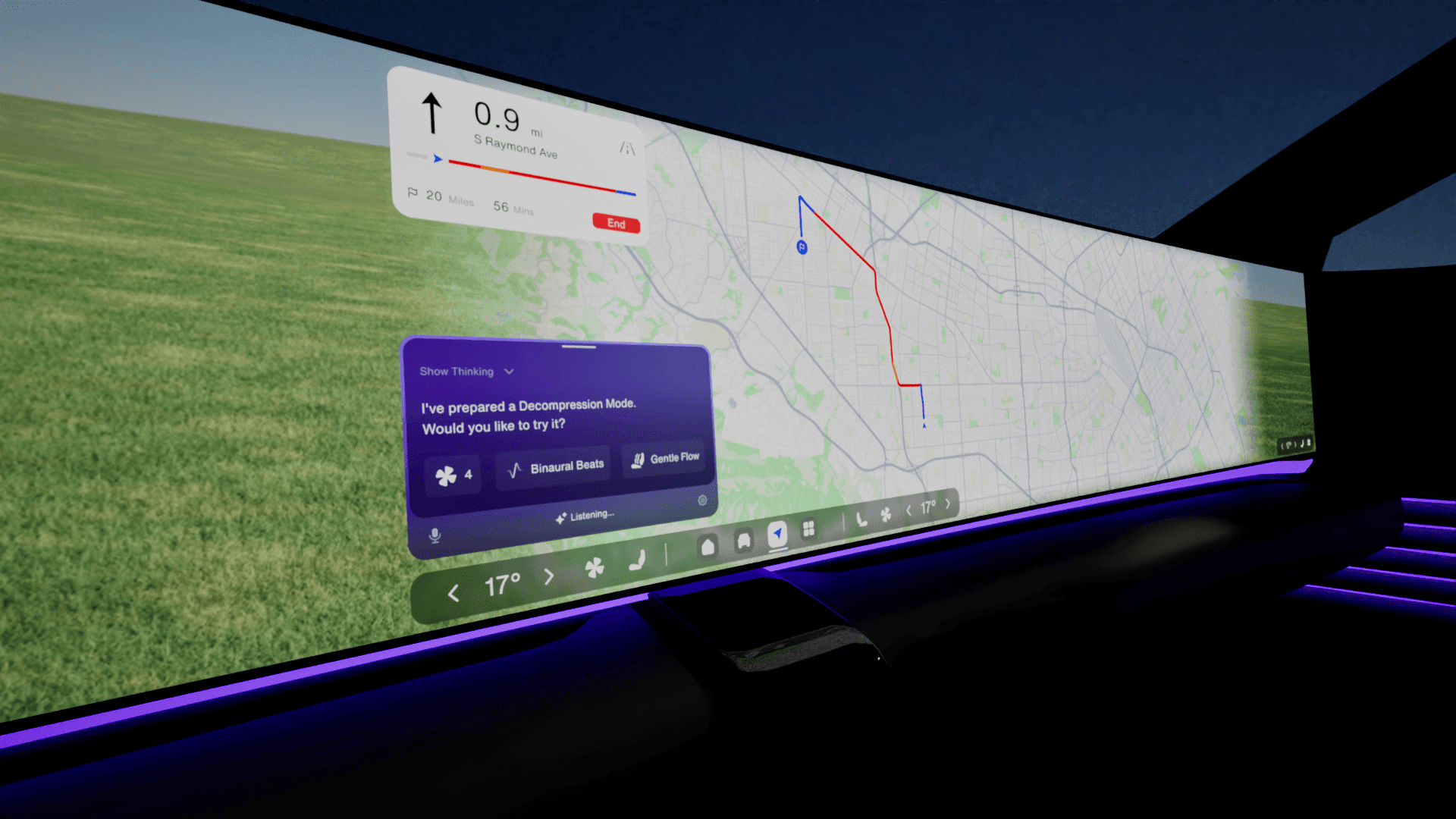
The system distills its complex analysis into a single, actionable prompt. Hiding the computational logic behind the 'Show Thinking' toggle, it presents the user with a simple Decompression Mode'. Ensures a seamless and non-intrusive decision process
The system distills its complex analysis into a single, actionable prompt. Hiding the computational logic behind the 'Show Thinking' toggle, it presents the user with a simple Decompression Mode'. Ensures a seamless and non-intrusive decision process
Follow Up Suggestion
Follow Up Suggestion
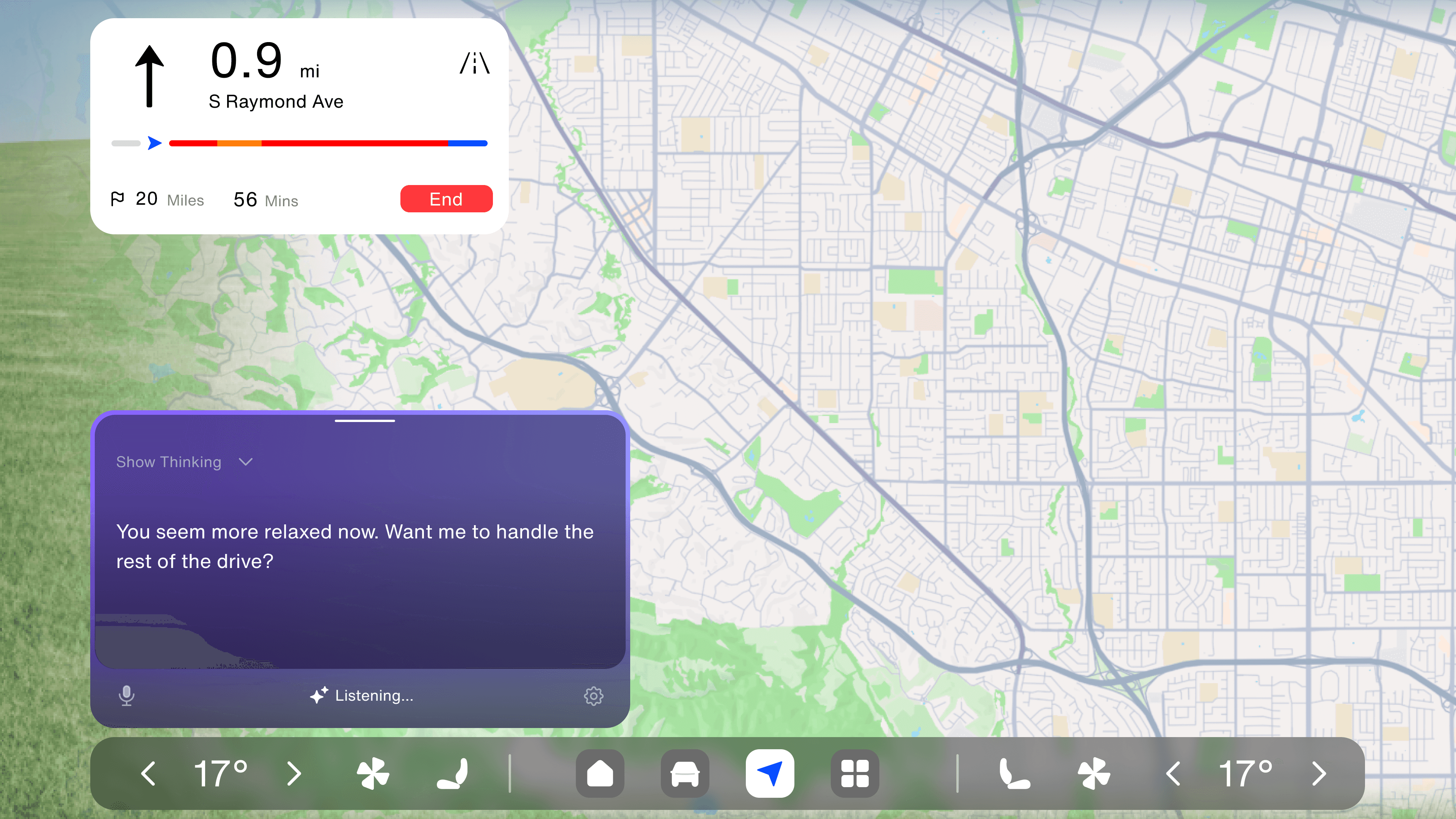
This simplified interface hides the complexity of AI processing to prioritize the user's immediate needs and emotional well-being. The follow-up prompt closes the feedback loop, shifting the system’s focus from intervention to autonomous convenience.
Future Plan